
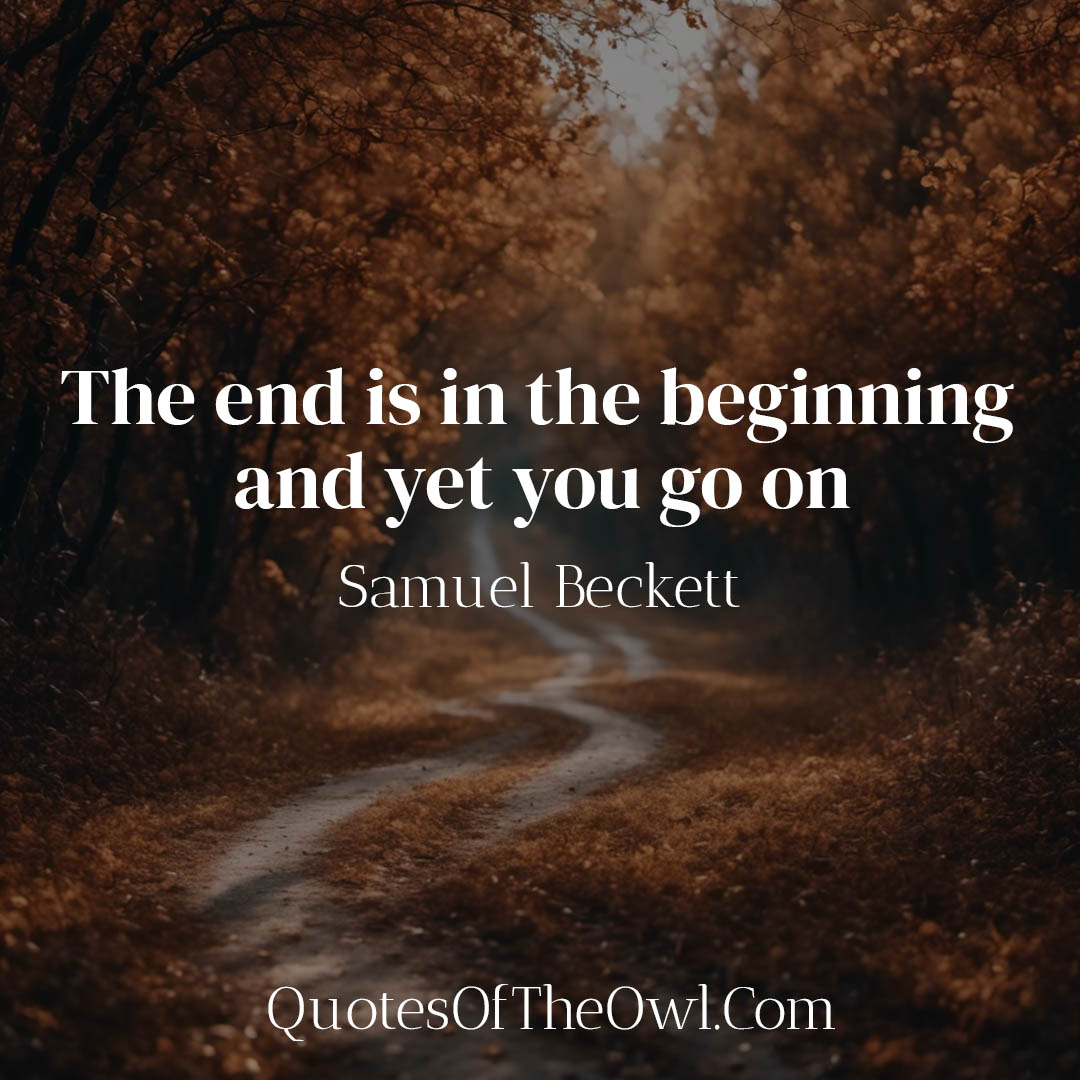
The end is in the beginning and yet you go on – Samuel Beckett
Samuel Beckett, an Irish playwright, novelist, and poet, is renowned for his profound exploration of existential themes. Among his many notable quotes, “The end is in the beginning and yet you go on” stands out for its enigmatic nature and deep philosophical implications. In this article, we delve into the meaning behind this intriguing quote and its relevance in understanding Beckett’s philosophy of life.
Explaining the Quote
Context of the Quote
The quote originates from Beckett’s novel “Endgame,” a masterpiece of absurdist literature. Set in a post-apocalyptic world, the characters are trapped in a cycle of repetition, reflecting the futility and meaninglessness of existence.
Interpretation
On the surface, the quote suggests a paradoxical notion of time and progression. Despite the inevitability of reaching the end, life continues in a perpetual cycle of beginnings and endings. It encapsulates the existential dilemma of human beings grappling with the passage of time and the relentless march towards an uncertain destiny.
The Cyclical Nature of Life and Time
Beckett’s View on Time
Beckett’s works often explore the cyclical nature of time, where past, present, and future merge into a seamless continuum. Time becomes a recurring motif, symbolizing the eternal recurrence of events and the inescapable repetition of human experiences.
Themes of Repetition and Circularity in His Works
In “Waiting for Godot” and “Endgame,” Beckett portrays characters stuck in repetitive routines, mirroring the absurdity of existence. The relentless repetition of actions underscores the futility of seeking meaning in a world devoid of purpose.
Existentialism in Beckett’s Philosophy
Absurdity of Human Existence
Beckett’s philosophy aligns with existentialist tenets, emphasizing the absurdity and meaninglessness of human existence. Characters in his works grapple with the absurdity of life, confronting the void and the inevitability of death.
The Search for Meaning
Despite the existential despair, Beckett’s characters continue to search for meaning amidst the chaos. The quest for significance becomes a recurring motif, driving their actions and interactions in a world devoid of inherent purpose.
Embracing the Paradox of the Quote
Finding Purpose in Repetition
Rather than succumbing to despair, Beckett invites readers to find meaning in the cyclical nature of life. The repetition of experiences offers opportunities for self-reflection and personal growth, highlighting the resilience of the human spirit.
Acceptance of Life’s Uncertainties
By embracing the paradox embedded in the quote, individuals can attain a deeper understanding of life’s complexities. Accepting the inevitability of endings enables one to appreciate the beauty of new beginnings, fostering a sense of gratitude and acceptance.
Applying Beckett’s Quote to Everyday Life
Overcoming Obstacles and Setbacks
In the face of adversity, Beckett’s quote serves as a reminder of the human capacity to endure and persevere. Despite encountering setbacks and failures, individuals possess the resilience to navigate life’s challenges and emerge stronger from the experience.
Perseverance and Resilience
Just as Beckett’s characters persist in their quest for meaning, individuals can draw inspiration from their resilience. By embracing the cyclical nature of existence, one can cultivate a mindset of perseverance and resilience, overcoming obstacles with fortitude and determination.
The Enduring Relevance of Beckett’s Philosophy
Influence on Literature and Art
Beckett’s profound insights into the human condition have left an indelible mark on literature and art. His exploration of existential themes continues to inspire generations of writers, artists, and philosophers, shaping contemporary discourse on the nature of existence.
Inspiring Philosophical Reflections
Through his timeless wisdom and penetrating intellect, Beckett challenges readers to confront life’s existential questions with courage and introspection. His quote serves as a catalyst for philosophical reflection, inviting individuals to contemplate the profound mysteries of existence.
Conclusion
In conclusion, Samuel Beckett’s quote, “The end is in the beginning and yet you go on,” encapsulates the paradoxical nature of human existence. By embracing the cyclical nature of life and time, individuals can find solace amidst the chaos, discovering meaning in the journey itself. As we navigate the complexities of existence, let us draw inspiration from Beckett’s profound insights, embracing the uncertainties of life with courage and resilience.
